What a Carve Up! 1961 UK Spooky Fun Comedy Film

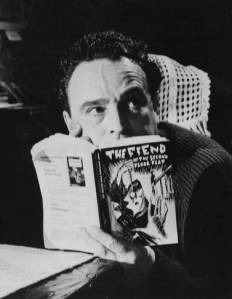
Ernest is a proof reader who has to read books with titles like The Fiend

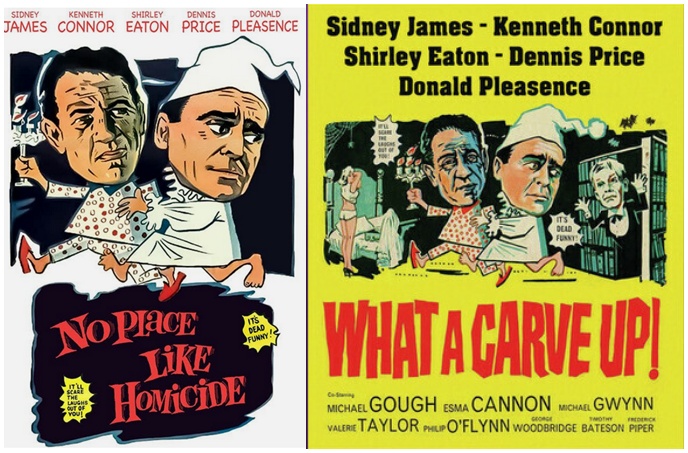
I’m the kind of person who loves a good comedy just as much as a good scary film—and when the two happen to mix, all the better and the 1961 British film What a Carve Up! (released in the U.S. as No Place Like Homicide) blends those elements beautifully.

In this “hearse opera”, we are introduced to Ernest Broughton (Kenneth Connor), a mild-mannered proofreader of horror books for a publishing company. He shares a flat with his friend Sid Butler (Sid James), a bookmaker with far more confidence than Ernest. His quiet life gets an injection of excitement, when solicitor Everett Sloane (Donald Pleasence) informs him that he’s named in the will of his uncle, Gabriel Broughton (Philip O’Flynn ). To learn the details, he must travel to Black Towers—Gabriel’s isolated, ominous mansion in the Yorkshire Moors.

Being the timid sort, Ernest persuades Sid to come along for moral support. Upon arrival, they’re greeted by a decidedly odd assortment of relatives: Guy Broughton (Denis Price), Ernest’s scheming cousin; Malcolm Broughton (Michael Gwynn), an eccentric pianist convinced everyone around him is “quite mad”; Janet Broughton (Valerie Taylor) and her father Dr. Edward Broughton (George Woodbridge); Emily Broughton (Esma Cannon), the elderly aunt who still lives as though the First World War never ended; and Linda Dixon (Shirley Eaton), Gabriel’s attentive nurse and Fisk, the family butler (Michael Gough).

When the will is finally read, the results are shocking: no one inherits a thing. The sole exception is Linda, who—much to her amusement—is left Gabriel’s medicines and syringe.

Then a storm knocks out the power and phone lines, plunging the house into darkness—and into a series of baffling, locked-room murders involving secret passages, ingenious traps, and even a poison dart. I won’t go any further and spoil the fun, in case you decide to watch it for yourself.

The film is well cast, Sid and Kenneth seem to be having the time of their lives playing things strictly for laughs and there are plenty of them.  Of course, you might remember both of these gents working together in various Carry On films, too.

Loosely based on the 1928 novel The Ghoul by Frank King which was the inspiration for the 1933 Boris Karloff film of the same name.

Writer Jonathan Coe used the film as inspiration for his 1994 novel What a Carve Up!
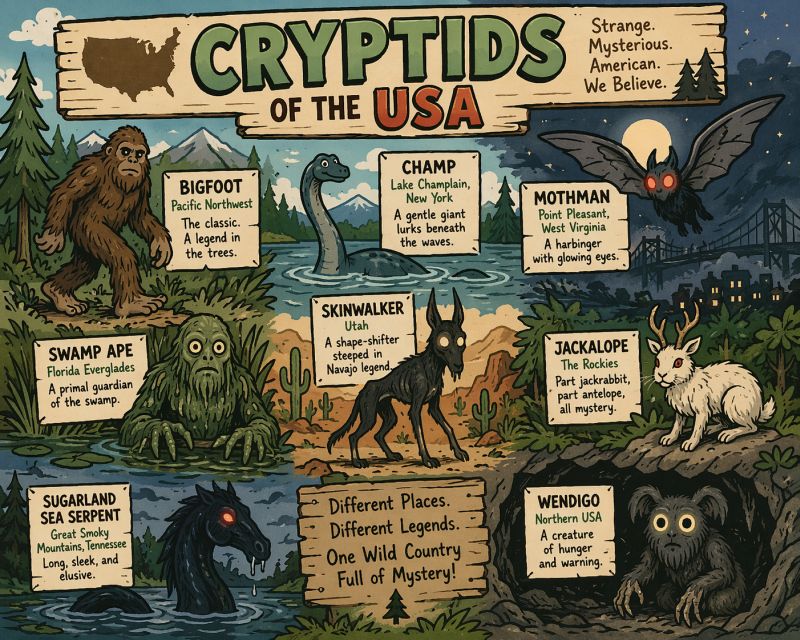
Cryptids of the USA

I admit it, I like things that are odd, spooky, creepy, weird, etc, etc, etc., and the United States is a goldmine for “cryptids”—fit nicely on this list.  Cryptids, for those who are unaware, are mysterious creatures that inhabit our folklore and campfire stories, even if they’ve never been caught on camera by a scientist. From the towering, ape-like Bigfoot to elusive lake monsters, winged terrors, and shape-shifting anomalies, these beings are woven into the fabric of our landscapes. Whether rooted in ancient Indigenous traditions, pioneer tall tales, or modern urban legends, these creatures seem to claim the wildest corners of our country, from deep swamps and dark forests to mist-covered mountains.
While icons like Bigfoot or the Mothman are famous nationwide, most cryptids are local celebrities, tied closely to a single state or region. I’ve put together a guide to the most well-known cryptid in every state, drawing from cryptozoology books, folklore anthologies, and popular enthusiast databases like Brilliant Maps. For every state, you’ll find one or two standout creatures, along with a quick look at what they are and the legends that keep them alive.

I’ve organized it alphabetically by state for easy reference.

  • Alabama — White Thang-A large, white-furred, ape-like creature (sometimes described as an albino Bigfoot or lion-like beast) with glowing red eyes. Sightings date back decades, often in rural wooded areas; it’s tied to eerie howls and livestock attacks.
  • Alaska — Tizheruk (or Iliamna Lake Monster)- A massive, serpentine or whale-like aquatic creature in Iliamna Lake and coastal waters. Inuit legends describe it as a giant eel- or crocodile-like beast that can snatch people or boats.
  • Arizona — Mogollon Monster-A tall, hairy, ape-like being with red eyes and a foul odor, said to roam the Mogollon Rim’s dense forests. Reports include screams and rock-throwing behavior similar to Bigfoot.
  • Arkansas — Fouke Monster (or White River Monster in some lists). A hairy, bipedal humanoid from the swamps near Fouke (inspired the film The Legend of Boggy Creek). The White River version is more serpentine/aquatic in eastern Arkansas.
  • California — Tahoe Tessie (or Dark Watchers / Fresno Nightcrawlers in other contexts)
    A large lake serpent in Lake Tahoe. The Dark Watchers are tall, shadowy humanoid figures seen in the Santa Lucia Mountains, while Fresno Nightcrawlers are bizarre, leg-only entities caught on video.
  • Colorado — Slide-Rock Bolter-A gigantic, whale-like creature in the Rockies that uses hooks on its split tail to cling to mountainsides and ambush prey by sliding down slopes at high speed.  It is said to have slits for eyes, a mouth that runs all the way behind its ears and loves to eat tourists. You have been warned!  :)
  • Connecticut — Melon Heads. Small, humanoids  with large heads  said to be escaped asylum patients or inbred mutants living in woods; aggressive toward intruders. Said to be mostly associated with Fairfield county area.
  • Delaware — Zwaanendael Merman (or Pukwudgie in some regional overlaps). A merman-like sea creature reported off the coast; Pukwudgie (a troll-like trickster from nearby Algonquian lore) sometimes extends here. Also the Selbyville Swamp Monster
  • Florida — Skunk Ape. Florida’s Bigfoot equivalent: a foul-smelling, hairy humanoid in the Everglades and swamps, often linked to misidentified bears or escaped primates.
  • Georgia — Altamaha-ha (Altie) A serpentine river monster in the Altamaha River, described as 20-30 feet long with flippers or a crocodile-like head.
  • Hawaii — Menehune. Small, dwarf-like builders from Hawaiian mythology (not always “cryptid” in the modern sense but often treated as such); nocturnal workers who construct structures overnight.
  • Idaho — Sharlie (or Lake Payette Monster). A serpentine lake creature in Payette Lake, similar to Nessie, with hump sightings dating back over a century.
  • Illinois — Enfield Horror. A three-legged, gray, kangaroo-like creature with glowing pink eyes that attacked people in 1973; one of the stranger “hopping” cryptids.  Though, stories of the  Horror date back to the early to 1940s.
  • Indiana — Meshekenabek (or other local beasts like the Pope Lick Monster in nearby areas). A water-based or reptilian creature in folklore; some lists tie Indiana to werewolf-like or frogman variants.
  • Iowa — Various lesser-known (e.g., Van Meter Monster in nearby contexts). Often overlaps with Midwest dogmen or thunderbirds.
  • Kansas — Often linked to Spook Lights or variations of Bigfoot-like beings.
  • Kentucky — Pope Lick Monster (or Goatman) A half-man, half-goat hybrid under a trestle bridge who lures victims to their death (tied to urban legends and train accidents).
  • Louisiana — Rougarou (or Honey Island Swamp Monster). A werewolf-like creature from Cajun folklore, often a cursed human; Honey Island version is more Bigfoot-like in swamps.
  • Maine — Variations of Bigfoot or lake monsters. Also Specter Moose first reported in the late 1890s in Allagash and Millinocket woods. Hunters reported encounters with a ghostly white colored moose that stood as high as 15 feet.
  • Maryland — Snallygaster. A dragon-like or bird-reptile hybrid with tentacles, iron beak, and one eye; 19th-20th century hoax/newspaper tales in Frederick area.
  • Massachusetts — Variations of Thunderbird or sea serpents.
  • Michigan — Michigan Dogman. A 7-foot-tall, wolf-headed humanoid with aggressive behavior; sightings spike in the north woods, often tied to Native lore.
  • Minnesota — Often Bigfoot or lake monsters. Wendigos
  • Mississippi — Variations of swamp creatures.  Mississippi River Monster
  • Missouri — Momo (Missouri Monster) A tall, hairy, foul-smelling ape-man similar to Bigfoot, with 1970s sightings near Louisiana, MO.
  • Montana — Often Bigfoot or Thunderbird. Also Shunka Warakin – Strange wolf-hyena creature.
  • Nebraska — Often variations of Bigfoot or local beasts.  Alma Vampire legend.
  • Nevada — Often desert variants or skinwalker overlaps. Tessie a Lake Tahoe serpent.
  • New Hampshire — Often lake monsters or Bigfoot.  Also Wood Devils hairy wild men from the colonial era.
  • New Jersey — Jersey Devil. A winged, hoofed, goat-headed creature born from a cursed 13th child in the Pine Barrens; one of America’s most iconic cryptids with centuries of lore.
  • New Mexico — Thunderbird (or variations like skinwalkers in Navajo areas). A massive, storm-controlling bird from Indigenous lore.
  • New York — Champ (Champy). Lake Champlain’s plesiosaur-like serpent; long-necked aquatic monster with hundreds of sightings.
  • North Carolina — Beast of Bladenboro or variations.
  • North Dakota — Often Wendigo influences or lake creatures. Also Beast of Bladenboro associated with the killing of livestock in the 1950s.
  • Ohio — Loveland Frogmen. Bipedal, frog-like humanoids seen along roadsides, carrying wands or bags; 1955 and 1972 sightings.
  • Oklahoma — Oklahoma Octopus. A giant freshwater octopus in lakes, said to drown swimmers (debated due to biology).
  • Oregon — Bigfoot hotspots (or variations like Batsquatch in nearby Pacific Northwest).
  • Pennsylvania — Squonk (or Jersey Devil overlaps). A tearful, shy creature that dissolves into tears when captured; from lumberjack folklore.  Also Raystown Ray, a large creature that inhabits Raystown Lake.
  • Rhode Island — Often sea serpents or vampire lore (e.g., Mercy Brown). Also the Glocester Ghoul.
  • South Carolina — Lizard Man of Scape Ore Swamp. A 7-foot reptilian humanoid with red eyes; 1988 attack reports.
  • South Dakota — Walgren Lake Monster (or Alkali Lake variants).A horned serpent or lake beast.
  • Tennessee — Tennessee Wildman. A hairy, screaming humanoid similar to Bigfoot.
  • Texas — Lake Worth Monster (or Goatman variants). A goat-horned, scale-covered humanoid that threw tires at cars in 1969.
  • Utah — Skinwalkers (Yee Naaldlooshii) Navajo shape-shifters (often wolf-like) tied to witchcraft; taboo and feared.
  • Vermont — Champ overlaps (Lake Champlain). Also the Bennington Monster, a Bigfoot like creature associated with Glastenbury Mountain.
  • Virginia — Snallygaster or Bigfoot variants. Also Bunny Man an axe-welding man associated with Fairfax County.
  • Washington — Bigfoot (Sasquatch). The definitive U.S. cryptid: tall, hairy, bipedal ape-man; thousands of sightings, especially in the Pacific Northwest.  Also a Batsquatch that began appearing after volcano erruption of 1980.
    West Virginia — Mothman. A winged, red-eyed humanoid with prophetic associations (linked to 1960s sightings and the Silver Bridge collapse).
  • Wisconsin — Beast of Bray Road. A werewolf-like or dogman creature seen on rural roads near Elkhorn; inspired books and films.
  • Wyoming — Jackalope. A rabbit with antelope horns; more hoax/folklore than scary, but iconic in tourism and tall tales.

Many states share cryptids (e.g., Bigfoot in dozens, Thunderbird in Western/Indigenous areas, or dogman/werewolf types in the Midwest). Some are more “popular” based on search interest or media (e.g., Mothman or Jersey Devil dominate their states culturally). Edge cases include creatures that blur folklore vs. cryptid (like Menehune or Skinwalkers) or modern “evidence” (e.g., photos/videos of Nightcrawlers).

My World Dies Screaming 1958 Public Domain Film

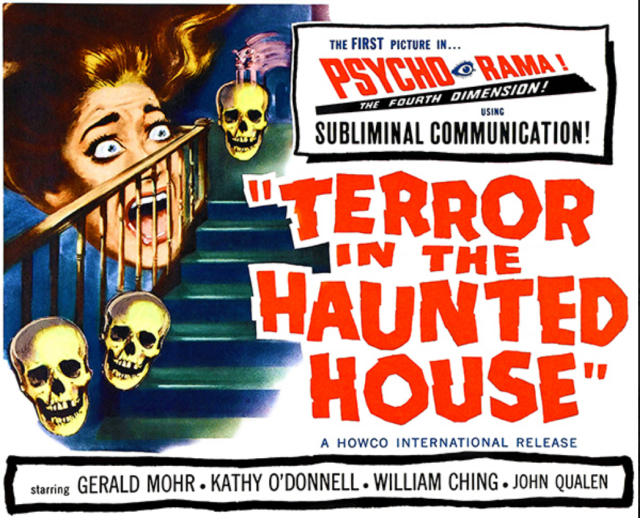
movie poster terror in the haunted house

Terror in the Haunted House

(also released Terror in the Haunted House)

Director: Harold Daniels
Starring: Cathy O’Donnell, Gerald Mohr, Lon Chaney Jr.
Genre: Psychological horror / mystery
Year: 1958

If you enjoy low-budget, late-1950s psychological chillers with a “something isn’t quite right” atmosphere, this one fits the bill. Cathy O’Donnell plays Jennifer Nichols, a newlywed who moves into an old mansion with her husband. Almost immediately, she begins experiencing terrifying visions and overwhelming feelings of déjà vu — as if she has lived in the house before.

She starts believing she may have committed a murder in a previous life. As her fear deepens, she becomes convinced that she is connected to a violent crime that once took place in the house. The story unfolds as a psychological mystery and you might wonder if Jennifer is actually remembering a past life., or is she losing her grip on reality or even, could someone be manipulating her?

Lon Chaney Jr. appears in a supporting role, adding a bit of old-school horror credibility.

The movie has a mixture of themes with reincarnation, psychological trauma,gaslighting and manipulation.  It is basically a haunted house vs a haunted mind kind of thing.

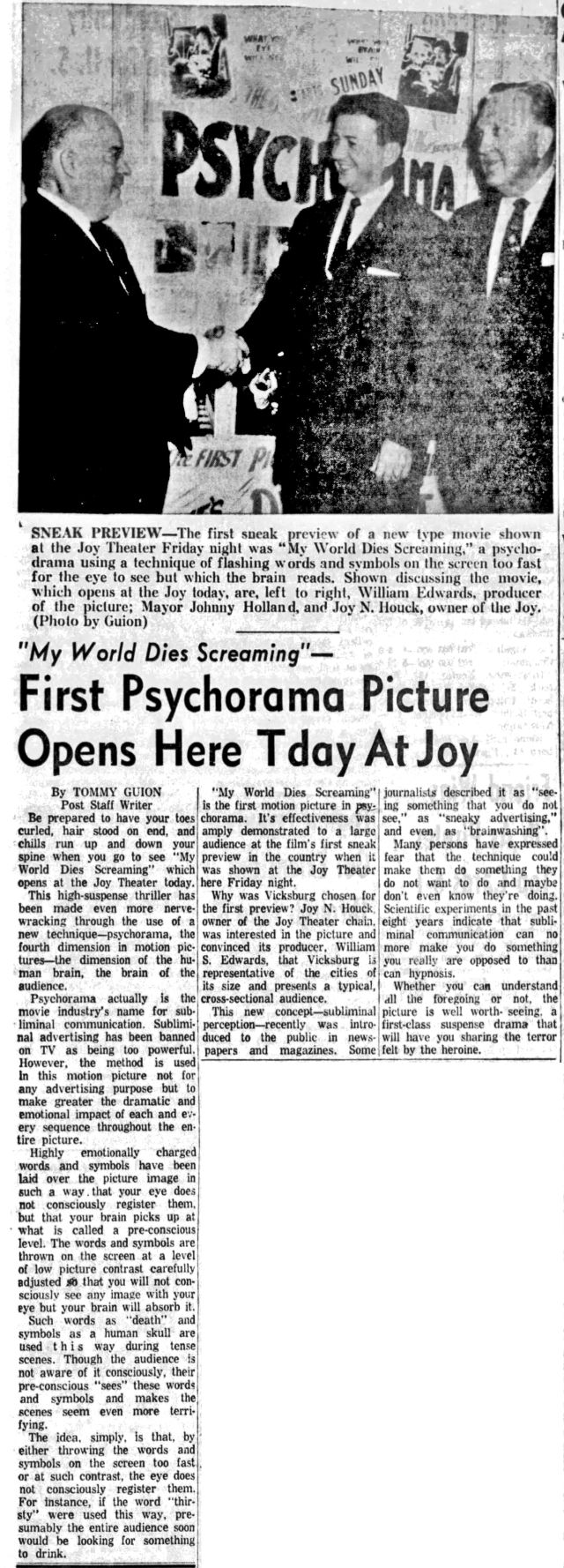
It was also the first film to use a technique called psycho-rama communication which was the use of flashing words and symbols on the screen  that moved so fast that the eyes couldn’t catch them, but the brain was able to read.   This was intended to heighten the viewing audiences fear and apprehension during the scenes that used the technique.

This isn’t a monster movie. It leans much more into psychological tension than supernatural spectacle.

It was shot in black and white and does have a very modest production value to it-a tight almost stage bound feel to it.

Retitled My World Dies Screaming for re-release, which is arguably the more dramatic title.

It often shows up in public-domain prints and late-night horror collections.

Is It Good?

Let’s be honest: it’s not a classic on the level of a big-studio horror film. But if you enjoy obscure, slightly creaky 1950s thrillers — the kind that feel like something you’d stumble across at 1:30 a.m. on a local channel — it has charm.

If you are into psychological suspense over jump scares and slow burn mysteries, then this 50’s low budget film might be worth at least one watch.

My World Dies Screaming newspaper article

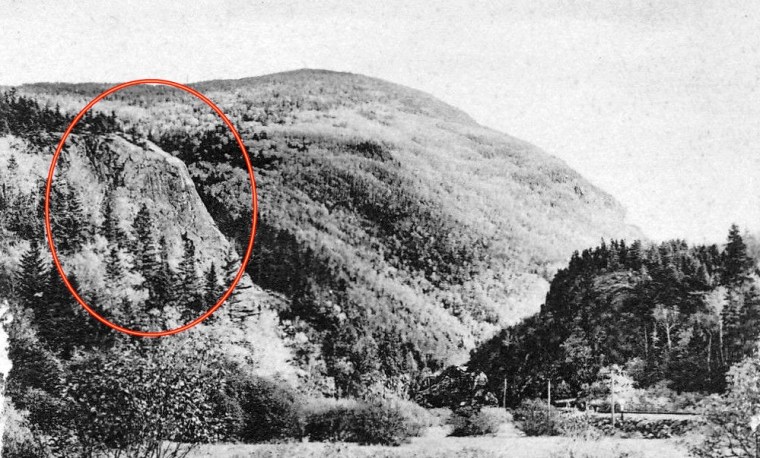
That Time New Hampshire Made an Elephant Out of a Rock

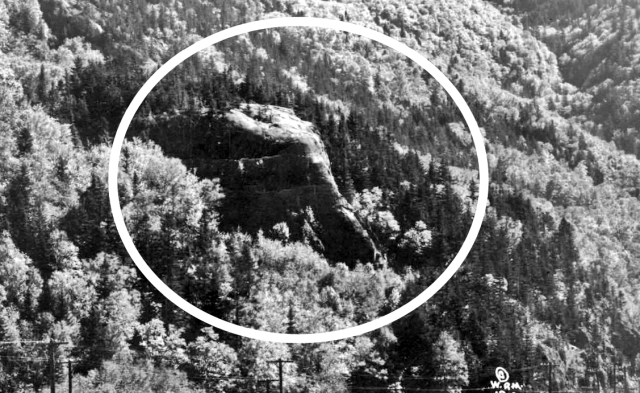
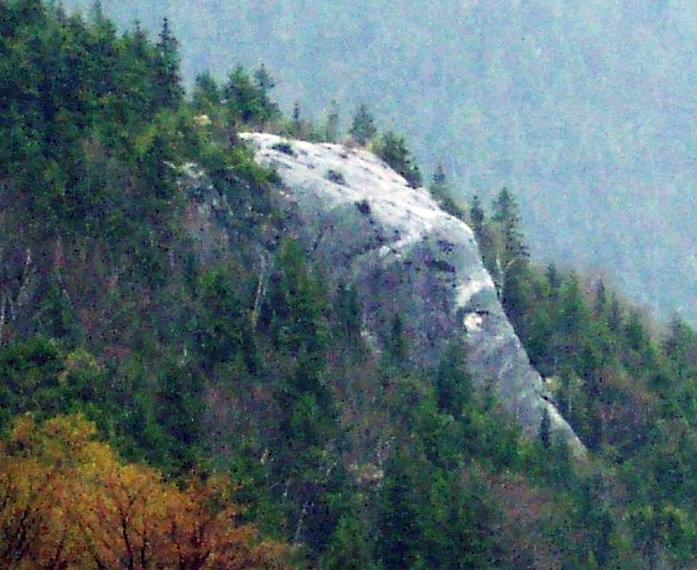
A charming look at New Hampshire’s Elephant Head rock formation in Crawford Notch, featuring vintage postcards and a modern rainy-day photo of this timeless natural curiosity.

I’m not sure what it is about New Hampshire and rock formations that resemble people or animals, but the Granite State certainly seems to have an abundance of them—and I’m not complaining. In the above photo is the Elephant Head, which I thoughtfully circled to make it easier to spot (that was kind of me, wasn’t it?). It’s a large boulder shaped uncannily like an elephant’s head emerging from the side of a hill, located at Crawford Notch, sometimes called the Gateway to the White Mountains. The two images above date to around 1910 and comes from my collection of vintage postcards.

The second photo, taken by me a few years ago on a very rainy day, shows that the formation hasn’t changed much over time. Someone has since added a white dot to represent the eye,  that was sweet of them, eh?

The elephant head isn’t the only rock formation that looks like something other than a rock, but I will touch on those in later posts.  :)

A Forgotten Haunted Church Story Hidden in an 1865 Newspaper

I admit that to me, one of life’s most simple pleasures, is having access to old newspapers thanks to newspapers.com.  I am not affiliated or sponsored by that website. I pay for my own yearly subscription out of my own pocket, just to be transparent.
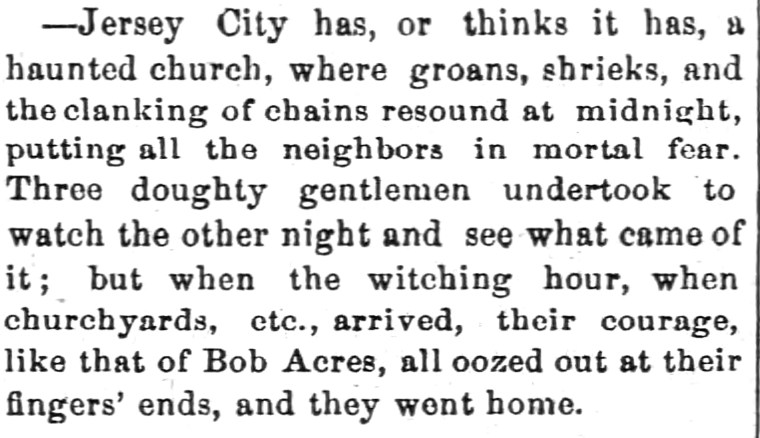
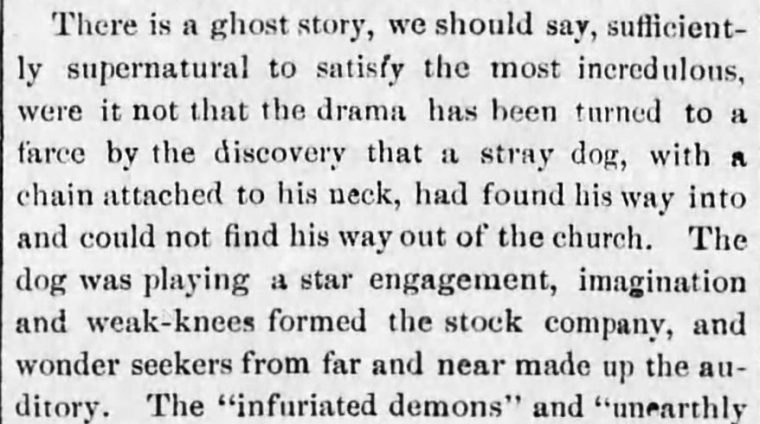
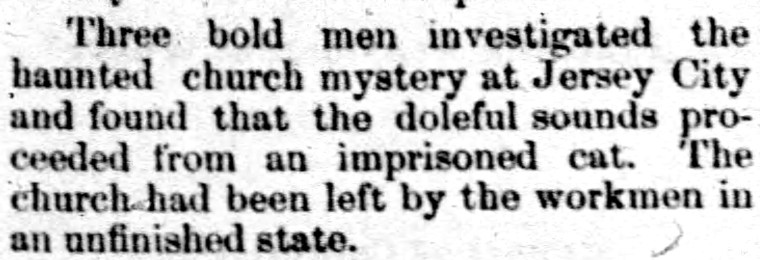
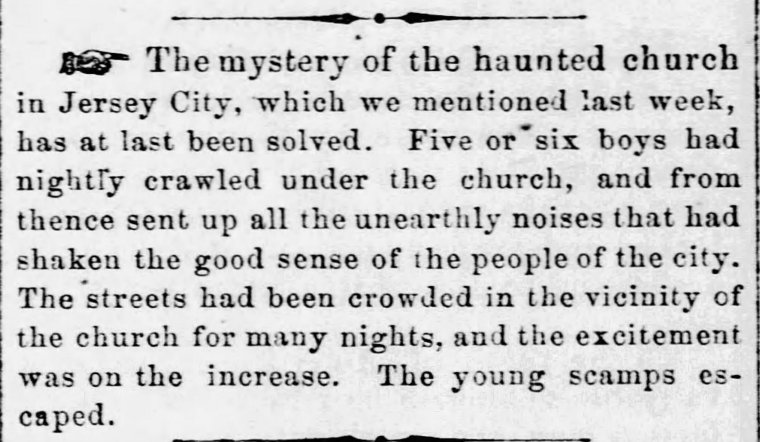
Anyway, as I was saying, as someone with a fondness for old newspapers and the paranormal and supernatural, I sometimes stumble upon reports of haunted locations that pique my curiosity. A particularly intriguing account from 1865 caught my attention, detailing a supposedly haunted church in Jersey City, New Jersey.

According to the news report, this church was plagued by inexplicable occurrences, starting in roughly September of 1865 and lasting for a few weeks.   Police as well as various interested parties investigated and found no clue as to what was causing the ghostly commotion. After a period of time, the police finally found the answer; a small dog  with its chain still attached to its collar had found its way into the church as was making horrific noises in its distress.  Of course, to me, this doesn’t explain why the noises seemed to only occur at night, but, I digress.

A second explanation was that it was a stray cat had been imprisoned accidentally in the church by workers and was making the ghostly noises in protest of its treatment.

And thirdly, a more interesting and reasonable explanation suggested that a group of local boys had gotten into the building, hiding beneath the floorboards to create the eerie wailing sounds that unnerved the townspeople. Despite their suspected mischief, however, these pranksters remained at large.

Of the proposed explanations, as mentioned, the story of the mischievous boys seems the most plausible—yet it remains unverified, as no one was ever held accountable for the disturbances.  Is it likely that, in the absence of concrete evidence, the authorities and townsfolk simply needed a rational explanation for the unsettling events and settled on the most acceptable narrative of the time.  No more newspaper accounts of further haunting activity so one of those must have been the answer, right?   Or, could it be that the haunting still continued, but newspapers were prevented from printing any more stories?

Anyone have any additional information about this?  I do realize the newspaper articles are from over 100 years ago, but a story like that might be something that locals in the area like to keep alive as part of their local folklore or history.

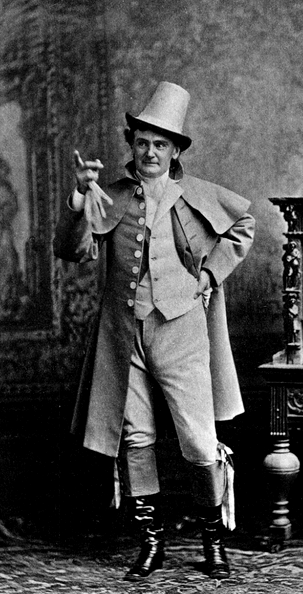
Oh, and the one article that mentions Bob Acres-well, I admit I had to do some research on that and discovered he is a fictional character from Richard Brinsley Sheridan’s classic 1775 comedy of manners, The Rivals.  The character was popular in 19th-century theatre, and was often described as being comic, naive and cowardly.
He was  played by American actor Joseph Jefferson (left), and there was a Louisiana train station after him — which eventually morphed into the  unincorporated community Bob Acres, Louisiana.

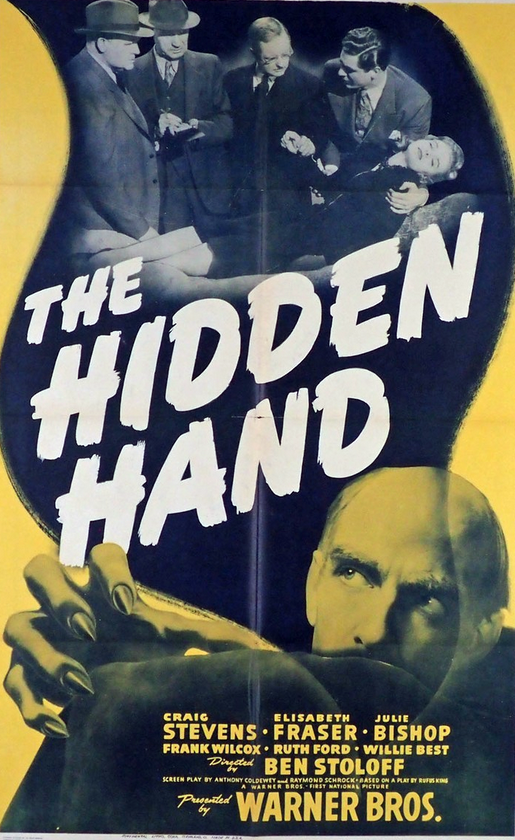
The Hidden Hand (1942): A Delightfully Campy Old Dark House Mystery

The Hidden Hand is a 1942 American comedy-horror mystery about greed, inheritance plots, and a very unusual scheme involving an escaped mental patient.

The film was based on the 1934 stage play Invitation to a Murder, which starred Gale Sondergaard as Lorina Channing and Humphrey Bogart as Horatio Channing. In 1936, Warner Bros. announced plans to produce a screen adaptation and even intended to have Sondergaard reprise her stage role. However, that project ultimately fell through and was never brought to the screen.

Plot Overview:
Eccentric wealthy matriarch Lorinda Channing is surrounded by greedy relatives eager to get their hands on her fortune. To manipulate events and keep her money away from them, she secretly helps her unstable brother John Channing escape from an insane asylum. Lorinda disguises John as the household butler, and under her direction he begins to terrorize and dispose of relatives in mysterious and often grisly ways.

Meanwhile, young attorney Peter Thorne and Lorinda’s secretary Mary Winfield who are romantically involved, grow suspicious as the body count rises. They work to uncover the truth, stop John’s rampage, and prevent further deaths — all while trying to unravel Lorinda’s strange scheme.

The story mixes elements of old-dark-house mystery with dark humor, secret passages, and suspense as the characters navigate hidden motives, shifting alliances, and the chaos surrounding the inheritance plot.

CAST

  • Craig Stevens as Peter Thorne — the young attorney and romantic lead (Stevens was known for roles in noir and adventure films, later starring in the TV series Peter Gunn).
  • Elisabeth Fraser as Mary Winfield— the spirited female lead, often involved in investigating the goings-on.
  • Julie Bishop in a supporting role (she appeared in many Warner Bros. pictures of the period).  Julie is the mother of character actress Pamela (Sue) Shoop who some might recall as portraying Karen in Halloween II.
  • Cecil Cunningham as Lorinda Channing — the scheming matriarch.
  • Milton Parsons as John Channing — the creepy, asylum-escaped brother; Parsons was a character actor frequently cast in eerie, sinister roles.
  • Willie Best in a supporting part (Best was a prominent African American comedian/actor in 1930s–1940s films, though his role here reflects the era’s stereotypical portrayals, which modern viewers often criticize as racially insensitive or “institutionalized racism”).
  • Other notables include Frank Wilcox, Ruth Ford, and Roland Drew in smaller roles.

You might be able to find this on YouTube as it supposedly is a public domain film.

Vintage Recipes: Healthful Summer Drinks Recipes from 1887

I found this in an 1887 issue of the Hollis Times, a newspaper out of New  Hampshire and thought I would share it.

Maple Beer: To four gallons boiling water put one quart maple syrup and one tablespoonful essence of spruce; when about milk warm add one pint of yeast, and when fermented bottle it. In three days it will be fit for use

Currant Shrub: Boil currant juice and sugar, in proportion of one pound sugar to one pint juice, five minutes. Stir it constantly while cooling; when cold, bottle it. Use like raspberry shrub, one spoonful or two to a tumbler full of water.

Raspberry Liquor: A pint of raspberries in a quart of spirits must be corked tightly for a month; then clarify a pound of sugar in a pint and a half of water; filter off the spirit and add it to the syrup; mix well and put it in small bottles.

Raspberry Vinegar: Mash two quarts of raspberries in an earthen vessel, put them in a large stone bottle or jar, pour into them two quarts of good wine vinegar, cork the jar slightly and let the juice distill in the sun or warmth for two or three weeks; then filter clear and bottle it, corking it well.

English Ginger Beer: Pour four quarts of boiling water on one ounce and a half of ginger, one ounce cream tartar, one pound brown sugar and two lemons sliced thin. Put in two gills (a gill is about 4 ounces) of yeast, let it ferment twenty-four hours and bottle it. It improves by keeping a few weeks, unless it is very hot weather, and it is a very nice beverage.

Lemonade Syrup: With one pound of sugar,  rasp the yellow rind of six lemons. Moisten the sugar with as much water as it will absorb, and boil it to a clear syrup. Add the juice of twelve lemons, stirring it in well beside the fire, but do not let it boil any more. Bottle the syrup at once, and cork it when cold. Mix a little of this syrup with cold water when lemonade is wanted.

Charles Dickens’ The Signal-Man – A Ghost Story for Christmas from 1976

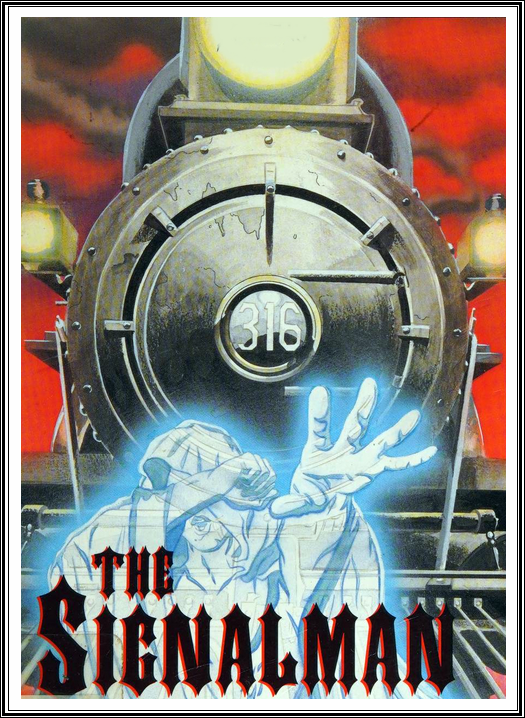
On June 9, 1865, Charles Dickens was caught in a serious train accident known as the Staplehurst Disaster. The train he was riding on derailed as it crossed a damaged railway bridge and plunged toward the river below. Miraculously, the coach Dickens was in teetered on the edge of the bridge without falling. He managed to climb out and spent the next hours helping rescue injured passengers.
Though he survived unharmed physically, the experience left him deeply shaken. From then on, he developed a lasting fear of trains—yet continued to travel by rail for his public readings, as it was the most practical way to reach his audiences.

The following year, in 1866, Dickens wrote the eerie short story The Signal-Man, about a railway worker who sees a ghostly figure at the entrance of a tunnel.  Each time the figure appears, a terrible railway accident follows soon after.

The Signalman 1976 Television Movie on BBC One

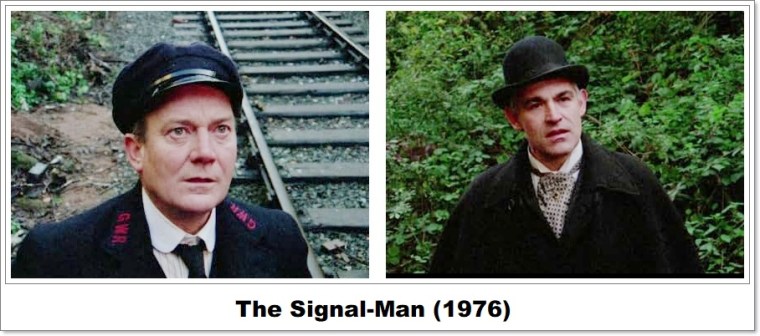
Adapted as a short television film for the A Ghost Story for Christmas series, The Signal-Man premiered on December 22, 1976.

Viewers expecting CGI or flashy special effects will likely be disappointed—but that is not a flaw. This is a story-driven piece, relying far more on mood, atmosphere, and suggestion than on visuals. Denholm Elliott is excellent as the haunted Signalman, plagued by a hooded specter that serves as a chilling harbinger of doom. Bernard Lloyd is equally solid as the Traveler, a passing stranger who befriends the Signalman and becomes the confidant to his growing dread.

Running at roughly 38 minutes, the film remains fairly faithful to Charles Dickens’s original short story. A quick search on YouTube should turn it up easily, and it is well worth watching. Also on YouTube you might find a few animated endeavors and even a few other live action adaptations.

If you so desire, you may read the short story for yourself at Charles Dickens Online.

The Licking River Ghost: An 1898 Newspaper Ghost Story

This story appeared in the Friday, December 9, 1898 edition of the Portsmouth Daily Chronicle in Portsmouth, New Hampshire.  The clipping (which I saved as an image file) was difficult to read, so I had some help from a website that converted it from image to text which I share below.   I believe the article was reporting on an event that happened in Ohio.
An Old Phenomenon Whose Existence Was Explained by a Bride

The Licking River ghost has been out more during the summer of 1898 than for many years. While the terror it once caused has been largely explained away, yet there are many people who are still uncomfortable when it comes out, and newcomers here often spend anxious nights when the phenomenon makes itself manifest.

Away back in the sixties the part of Zanesville known as the Terrace, between the Muskingum and the Licking, was perturbed by ghostly occurrences. Unusual noises were heard. Latches rattled at the touch of unseen hands. Windows shook uncannily. The first and most natural theory was that a colony of ghosts had invaded Zanesville. But while this theory was acceptable to many, others doubted. For ghosts do not haunt in droves, and the Terrace had never done anything worthy of so general a visitation. supposed ghost flock came and went. It by no means confined itself to nocturnal visits. It also came by day. Servants declared they would not live in the haunted houses. Many actually left. Often there would be a period of immunity lasting for several months. Then the latches would rattle, the doors and windows shiver, and the general state of ghost activity would resume.

The people came from the other side of the river and spent nights in the afflicted houses. They always told the same story. They always heard a very persistent and creepy rattle which seemed to affect every loose window latch or ornament. The ghost colony began to affect the price of real estate. Houses which, could not be warranted against unearthly noises seemed about to enter on a career of vacancy.

It was all explained by the return of a bride and bridegroom from their honeymoon. Of course, they had been to Niagara Falls. The bridegroom took his bride to live in one of the haunted houses. A few nights later the house, in common with some twenty-five more, was visited by the ghost. The strange rattle began. It never seemed to stop. A window which shook as if it were in fear itself would be stilled by the pressure of a palm, but the noise began again when the pressure was removed.

“Why,” said the bride suddenly, her face lighting, “that window acts just like the one in our hotel at Niagara Falls.’

“What of that? There are no falls here, none to speak of,” said her husband.

“But if you’ll think the thing over, you’ll remember these ghosts appeared right after the Dillons put in their new dam,” she said.

Then he saw it, too. The theory was eagerly grasped. Investigation showed it to be the real explanation. A geologist confirmed it. The cause was known, and the phenomenon to this day is known as the Licking River ghost.

The dam in the Licking River is just at its confluence with the Muskingum. The famous old “Y” bridge which spans both rivers is located there. A dam had been built and the water fell upon a ledge of limestone which ran through the Terrace. When the water reaches a certain height it sets the ledge in vibration, which accounts for the ghosts.

This summer the Licking River ghost was often out, on account of the wet weather. But in spite of the excellent explanation many people still feel the gooseflesh rise when the windows and doors begin their uncanny rattle.

A Little Bit of Glad: Littleton’s Library and Pollyanna

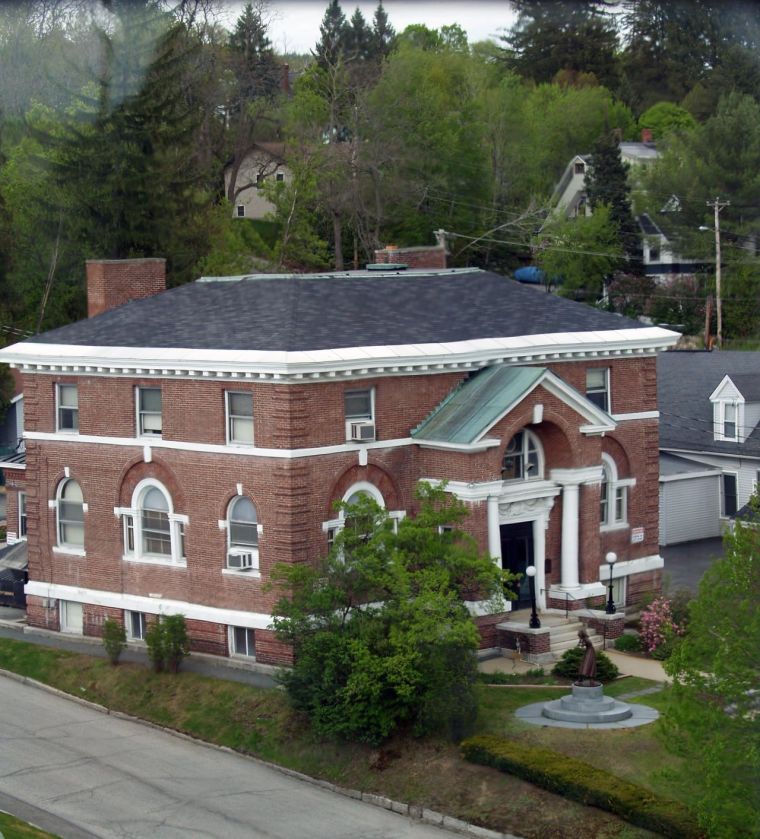
Littleton Library Littleton, NH

I’ve always loved libraries—especially those housed in old, historic buildings—and the one in Littleton is no exception. Now more than 113 years old, the library is a handsome blend of Neo-Classical and Georgian architectural styles, and it came into being with a little help from Andrew Carnegie. At the turn of the 20th century, Andrew Carnegie funded the construction of more than 2,500 libraries worldwide, believing that free access to books and knowledge was essential for self-improvement and opportunity. His library grants helped countless towns—especially small and rural communities—establish permanent public libraries, many of which still serve their communities today as enduring symbols of education, civic pride, and philanthropy.

For several years, Littleton had been working toward securing a permanent home for its library. That goal finally became achievable in 1902, when the town received the grant from the Carnegie Foundation. As was typical of Carnegie-funded libraries, a few conditions were attached: the town had to commit $1,500 annually for operating expenses and purchase a suitable parcel of land on which to build. Once those requirements were met, the foundation provided $15,000 to turn the dream into reality. The library officially opened its doors in 1906.

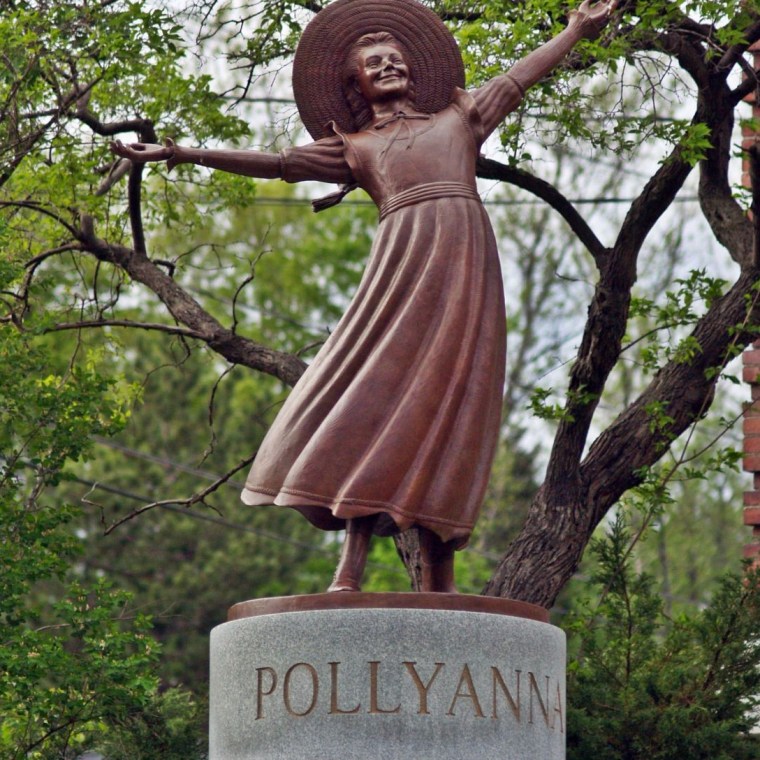
Pollyanna Statue in Littleton, New Hampshire

In 2003, the library unveiled a statue of the beloved literary character Pollyanna on its front lawn. Created by artist Emile Birch, the statue captures Pollyanna mid-motion—what looks like a joyful dance—with a broad smile on her face and her arms flung wide open. She radiates optimism and happiness, which feels entirely fitting.

At first glance, Pollyanna dancing on the lawn of a library makes perfect sense—she’s a literary character, after all. But the connection runs deeper. Eleanor H. Porter, who wrote Pollyanna (published in 1913), was born in Littleton in 1868 and lived there until her marriage to John Porter in 1892, when the couple moved to Massachusetts. In fact, her childhood home was located not far from where the library now stands.

To this day, Littleton proudly celebrates this literary connection every June with the Pollyanna “Glad Day” Festival, a popular event that brings the town together in the spirit of optimism, community, and—true to Pollyanna’s philosophy—finding something glad in every situation. Pretty cool, huh?

If you visit the statue, be sure to rub the tip of her boot for a little extra good luck. 🙂

I Love Libraries 

I’ve always thought libraries were pretty special places. When I was in school—especially elementary school—I spent as much time in the library as I could. I loved being surrounded by books; there was just something about the atmosphere that felt comforting, curious, and full of possibility.

A Library is More Than Just a Collection of Books

A library is so much more than a building filled with books. Depending on the location, it can offer a wide range of resources for nearly every member of the community: free internet and computer access, books, CDs, DVDs, even cassette tapes. Many libraries host social and educational activities, such as author talks, book discussion groups, classes, and story times for kids. Some sell used books at very low prices, with the proceeds going right back into supporting the library. Others provide free or low-cost access to subscription databases and journals that would otherwise be quite expensive. And now, many libraries have gone digital, allowing patrons to borrow eBooks—how cool is that?

So why not stop by your local library and see what it has to offer? You just might be pleasantly surprised.